 EN
EN

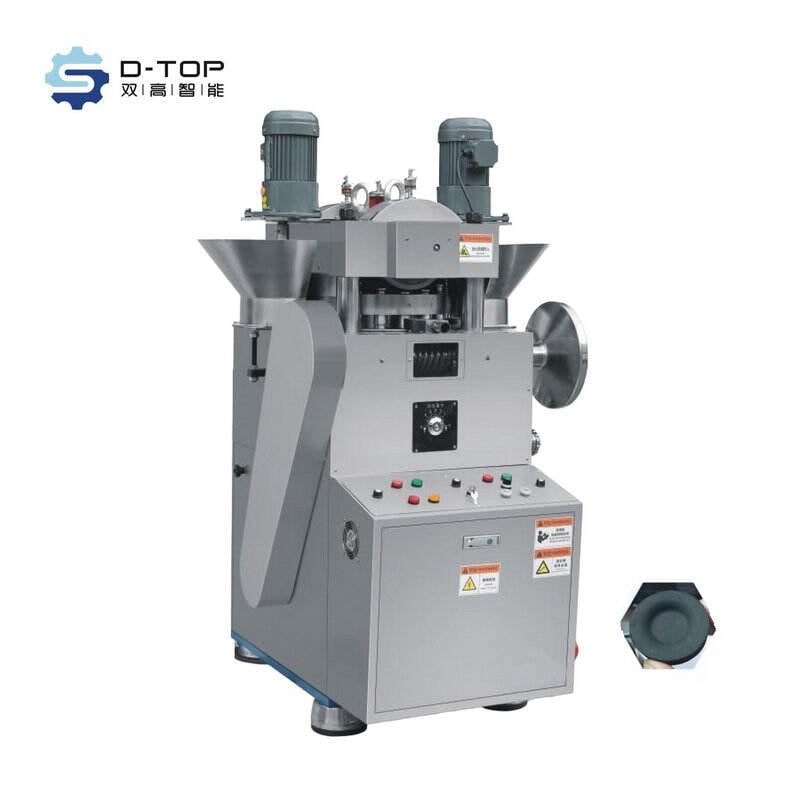
Selecting the appropriate tablet press machine for your manufacturing needs requires careful consideration of multiple technical and operational factors. The pharmaceutical, nutraceutical, and chemical industries depend heavily on these precision devices to produce consistent, high-quality compressed tablets that meet strict regulatory standards. Understanding the various types of tablet press machines available, their capabilities, and how they align with your specific production requirements is essential for making an informed investment decision that will serve your business effectively for years to come.
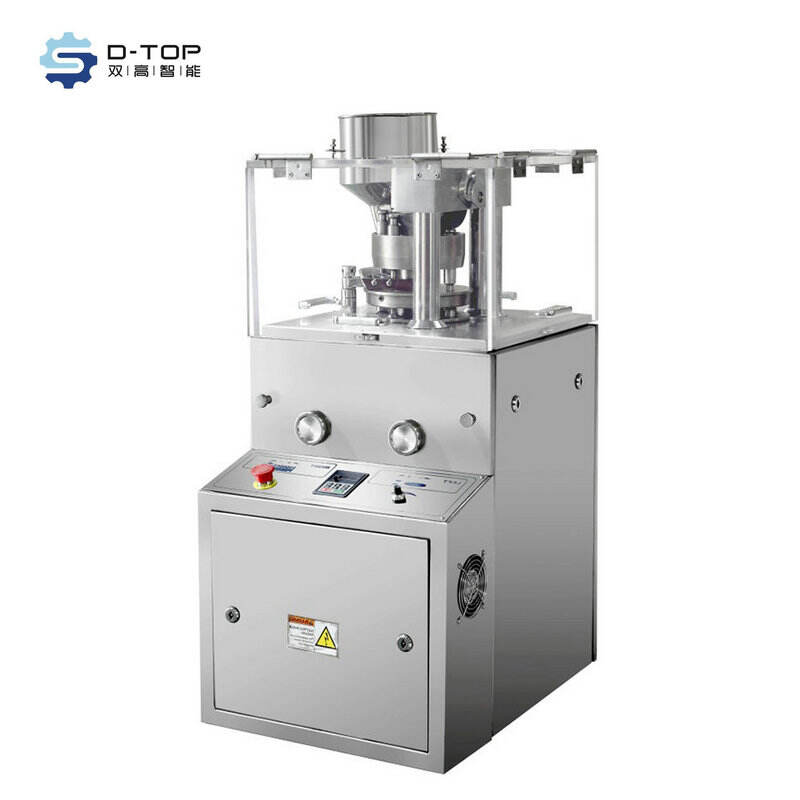
Understanding Different Types of Tablet Press Machines
Single Punch Tablet Presses
Single punch tablet press machines represent the most basic form of tablet compression technology, featuring a simple mechanism with one set of punches and dies. These machines operate by filling a die cavity with powder material, then compressing it using upper and lower punches to form individual tablets. The straightforward design makes single punch presses ideal for small-scale production, research and development activities, or pilot batch manufacturing where flexibility and ease of operation are prioritized over high-volume output.
The production capacity of single punch machines typically ranges from 500 to 3,000 tablets per hour, making them suitable for specialized formulations, custom products, or when frequent changeovers between different tablet specifications are required. These machines offer excellent control over compression parameters and are particularly valuable for developing new formulations where precise adjustments to pressure, dwell time, and fill depth are crucial for achieving optimal tablet characteristics.
Rotary Tablet Press Systems
Rotary tablet press machines feature multiple punch and die stations arranged in a circular configuration, allowing continuous tablet production at significantly higher speeds than single punch alternatives. The rotary design enables simultaneous filling, compression, and ejection operations across different stations, resulting in production rates that can exceed 100,000 tablets per hour depending on the machine configuration and tablet specifications. This continuous operation principle makes rotary presses the preferred choice for medium to large-scale commercial production.
Modern rotary tablet press machine systems incorporate advanced features such as force monitoring, weight control systems, and automated rejection mechanisms to ensure consistent tablet quality throughout extended production runs. The ability to maintain precise control over compression parameters across multiple stations simultaneously makes these machines particularly valuable for pharmaceutical applications where uniformity and compliance with regulatory standards are paramount.
Production Capacity and Volume Requirements
Assessing Current and Future Production Needs
Determining the appropriate production capacity for your tablet press machine requires thorough analysis of both current manufacturing demands and projected future growth. Consider factors such as existing product lines, planned expansions, seasonal variations in demand, and potential new product introductions when evaluating capacity requirements. A tablet press machine that meets only current needs may quickly become inadequate as business grows, while oversized equipment represents unnecessary capital investment and higher operational costs.
Production planning should also account for efficiency factors such as changeover times, maintenance schedules, and quality control procedures that affect overall equipment effectiveness. Calculate realistic production rates based on actual operating conditions rather than theoretical maximum speeds, incorporating time for setup, cleaning, and minor adjustments that are part of normal manufacturing operations.
Balancing Speed with Quality Control
Higher production speeds in tablet press machines can potentially compromise tablet quality if not properly managed through appropriate process controls and monitoring systems. The relationship between compression speed and tablet characteristics such as hardness, friability, and content uniformity must be carefully evaluated for each specific formulation. Some materials and formulations may require slower compression speeds to achieve acceptable tablet properties, making it important to match machine capabilities with product requirements.
Quality control systems integrated into modern tablet press machines include real-time weight monitoring, hardness testing capabilities, and automated rejection systems that remove non-conforming tablets from the production stream. These features enable manufacturers to maintain high production speeds while ensuring that all tablets meet predetermined quality specifications, providing the optimal balance between efficiency and product quality.
Material Compatibility and Formulation Considerations
Powder Flow Characteristics
The flow properties of your powder formulation significantly impact tablet press machine selection and performance. Materials with poor flow characteristics may require specialized feeding systems, modified hopper designs, or force-feeding mechanisms to ensure consistent die filling and uniform tablet weights. Evaluate factors such as particle size distribution, moisture content, electrostatic properties, and cohesiveness when determining compatibility between your formulation and potential tablet press machine options.
Some tablet press machines incorporate advanced feeding systems such as paddle feeders, forced feeding mechanisms, or vacuum-assisted filling to accommodate challenging materials with poor flow properties. These features can significantly improve production efficiency and tablet quality when working with difficult formulations, but they also add complexity and cost to the equipment.
Compression Requirements and Tablet Hardness
Different formulations require varying levels of compression force to achieve desired tablet hardness and structural integrity. The maximum compression force capability of a tablet press machine must align with your specific formulation requirements, considering factors such as tablet size, active ingredient properties, and excipient characteristics. Materials that are difficult to compress may require machines with higher force capabilities or specialized tooling designs.
Consider also the relationship between compression force and tablet press machine wear patterns, as consistently operating near maximum force limits can accelerate component wear and increase maintenance requirements. Select equipment with adequate force capacity to handle your most demanding formulations while maintaining reasonable safety margins for optimal machine longevity.
Regulatory Compliance and Documentation Features
FDA and GMP Requirements
Pharmaceutical and nutraceutical manufacturers must ensure that their tablet press machine selection supports compliance with FDA regulations and Good Manufacturing Practice guidelines. Modern tablet press machines designed for regulated industries incorporate features such as electronic batch records, audit trails, user access controls, and data integrity safeguards that facilitate regulatory compliance and simplify validation processes.
Documentation capabilities should include comprehensive data logging of critical process parameters, automatic generation of batch reports, and integration with enterprise resource planning systems for complete production traceability. These features not only support regulatory compliance but also provide valuable data for process optimization and quality improvement initiatives.
Validation and Qualification Support
The tablet press machine manufacturer should provide comprehensive validation support including Installation Qualification, Operational Qualification, and Performance Qualification documentation packages. This support significantly reduces the time and resources required for bringing new equipment into compliant operation and ensures that all critical systems function according to predetermined specifications.
Consider the availability of ongoing technical support, spare parts supply, and software updates that may be required to maintain validated status throughout the equipment lifecycle. Manufacturers with strong regulatory expertise and established quality systems provide greater assurance of long-term compliance support.
Economic Factors and Return on Investment
Initial Capital Investment Analysis
The purchase price of a tablet press machine represents only one component of the total cost of ownership calculation. Consider additional expenses such as installation requirements, operator training, validation activities, and initial spare parts inventory when evaluating the complete financial impact of equipment acquisition. Higher-capacity machines or those with advanced automation features typically command premium pricing but may offer superior long-term value through increased efficiency and reduced labor costs.
Financing options such as equipment leasing, rental agreements, or phased payment plans may provide alternatives to large upfront capital expenditures, particularly for smaller manufacturers or those with limited available capital. Evaluate these alternatives considering factors such as tax implications, cash flow impact, and total cost over the equipment lifecycle.
Operational Cost Considerations
Ongoing operational costs for tablet press machines include energy consumption, maintenance requirements, consumable tooling replacement, and labor expenses. Energy-efficient designs and optimized mechanical systems can significantly reduce electrical consumption, particularly important for high-volume production operations. Maintenance-friendly designs with easily accessible components and standardized replacement parts help minimize downtime and service costs.
Labor efficiency improvements through automation features, simplified operation procedures, and reduced changeover times can provide substantial cost savings over the equipment lifetime. Calculate the potential return on investment for advanced features considering both direct cost savings and indirect benefits such as improved product quality and reduced waste.
FAQ
What factors determine the compression force requirements for different tablet formulations?
Compression force requirements depend on several formulation-specific factors including the hardness and brittleness of active ingredients, the type and concentration of binding agents, particle size distribution, and moisture content. Dense, hard materials typically require higher compression forces to achieve adequate tablet integrity, while softer materials may compress effectively with lower forces. The desired tablet hardness specification also influences force requirements, with harder tablets generally needing greater compression pressure. Additionally, tablet size and thickness affect the force needed, as larger tablets require proportionally more force to achieve equivalent pressure per unit area.
How do I calculate the appropriate production capacity for my tablet press machine needs?
Calculate production capacity by analyzing your current and projected tablet demand, including consideration for peak production periods, multiple product lines, and planned business growth. Factor in realistic efficiency rates accounting for changeovers, maintenance downtime, and quality control activities, typically assuming 70-85% overall equipment effectiveness for planning purposes. Consider batch sizes, production scheduling flexibility, and the ability to handle rush orders when determining capacity requirements. It's generally advisable to select equipment with 20-30% excess capacity above calculated minimum needs to accommodate growth and unexpected demand fluctuations.
What maintenance requirements should I expect with different types of tablet press machines?
Maintenance requirements vary significantly between single punch and rotary tablet press machines, with rotary systems typically requiring more complex preventive maintenance due to their increased number of moving parts and higher operating speeds. Regular maintenance tasks include punch and die inspection and replacement, lubrication of mechanical components, cleaning and sanitization procedures, and calibration of monitoring systems. High-production rotary machines may require daily inspections and weekly detailed maintenance, while single punch machines often need only periodic cleaning and tooling replacement. Establish maintenance schedules based on manufacturer recommendations, production volume, and material characteristics to ensure optimal performance and longevity.
How important is supplier support and technical service availability?
Supplier support quality significantly impacts the long-term success of tablet press machine operations, particularly for complex rotary systems or specialized applications. Comprehensive technical support should include installation assistance, operator training programs, troubleshooting guidance, and rapid response for critical issues that could halt production. Availability of spare parts, both routine consumables and emergency replacement components, is crucial for minimizing downtime and maintaining production schedules. Consider suppliers with local service capabilities, established parts distribution networks, and proven track records in your industry when making equipment selection decisions.
Table of Contents
- Understanding Different Types of Tablet Press Machines
- Production Capacity and Volume Requirements
- Material Compatibility and Formulation Considerations
- Regulatory Compliance and Documentation Features
- Economic Factors and Return on Investment
-
FAQ
- What factors determine the compression force requirements for different tablet formulations?
- How do I calculate the appropriate production capacity for my tablet press machine needs?
- What maintenance requirements should I expect with different types of tablet press machines?
- How important is supplier support and technical service availability?